Why Does Zomato's Marketing Work Even When You're Not Hungry?
Table of Contents
What Makes Zomato One of India's Most Successful Marketing Brands?
Have you ever opened Zomato while sitting in a fully stocked kitchen?
Or found yourself ordering food simply because a clever notification popped up on your screen?
You're not alone.
Zomato has mastered something many brands struggle to achieve: it influences customer behavior before customers even realize they want the product. While most businesses focus on selling products, Zomato focuses on understanding human psychology, building emotional connections, and creating memorable brand experiences. Its marketing strategy has become a benchmark for businesses looking to strengthen their brand presence, increase customer engagement, and drive sales.
In this Zomato marketing strategy case study, we'll break down why Zomato's marketing works so effectively and explore valuable lessons that businesses can apply to their own growth strategies.
The best brands stay on your mind long before you need them
What Is Zomato's Marketing Strategy?
At its core, Zomato's marketing strategy revolves around four key pillars:
- Emotional branding.
- Humor-driven communication.
- Data-powered personalization.
- Consistent customer engagement.
Instead of constantly promoting discounts or products, Zomato focuses on staying relevant in consumers' daily lives. Whether it's a witty push notification, a trending meme, a social media post, or a personalized recommendation, every interaction is designed to keep the brand top-of-mind.
The result?
Customers think about food and Zomato even when they aren't hungry.
Why Does Zomato's Marketing Work So Well?
1. Zomato Understands Consumer Psychology
The best marketing doesn't sell products.
It sells emotions.
Zomato taps into everyday feelings such as:
- Hunger cravings.
- Weekend relaxation.
- Celebration moments.
- Late-night snacking.
- Comfort eating.
- Convenience.
Rather than advertising food delivery, Zomato markets experiences and emotions.
A simple notification like: "Your favorite biryani misses you."
feels personal, relatable, and difficult to ignore.
This emotional connection is one of the biggest reasons why Zomato enjoys exceptional customer engagement and brand recall.
What if customers thought about your brand as often as they think about Zomato?
2. Zomato Makes Advertising Feel Like Entertainment
Most advertisements interrupt.
Zomato entertains.
The brand's social media presence is built around:
- Trending memes.
- Pop culture references.
- Relatable humor.
- Current events.
- Viral conversations.
Instead of creating content that people skip, Zomato creates content people actively share.
This is a powerful lesson for any business. Customers are far more likely to engage with brands that make them laugh, think, or feel something. A successful creative advertising agency in Ahmedabad often follows the same principle, creating campaigns that audiences genuinely enjoy rather than simply tolerate.
3. Timing Plays a Huge Role
One of Zomato's biggest strengths is delivering the right message at the right moment.
Think about when you typically receive notifications:
- Around lunchtime.
- During dinner hours.
- On weekends.
- During rainy weather.
- While watching major sporting events.
These carefully chosen moments increase the likelihood of conversion because the message aligns with customer behavior. This strategy demonstrates that effective marketing isn't just about what you say, it's also about when you say it.
Attention is easy to get. Staying memorable is the real challenge
4. Zomato Has Built a Highly Recognizable Brand Voice
Many brands sound different across platforms.
Zomato doesn't.
Whether you're reading an email, scrolling Instagram, opening the app, or receiving a push notification, the tone remains:
- Friendly
- Witty
- Conversational
- Human
This consistency strengthens brand recognition and builds trust over time.
Businesses looking to create stronger market positioning often work with a branding agency in Ahmedabad to develop a distinct and consistent brand identity that resonates across every customer touchpoint.
How Zomato Uses Push Notifications to Trigger Cravings
Push notifications are one of Zomato's most effective marketing tools. However, unlike traditional promotional messages, Zomato's notifications focus on curiosity and emotion.
Examples include:
- "Cooking today? That's brave."
- "Dinner plans are looking delicious."
- "Your comfort food is just a tap away."
These notifications don't aggressively sell. Instead, they spark cravings and encourage action naturally. This subtle approach makes customers more receptive and significantly improves engagement rates.
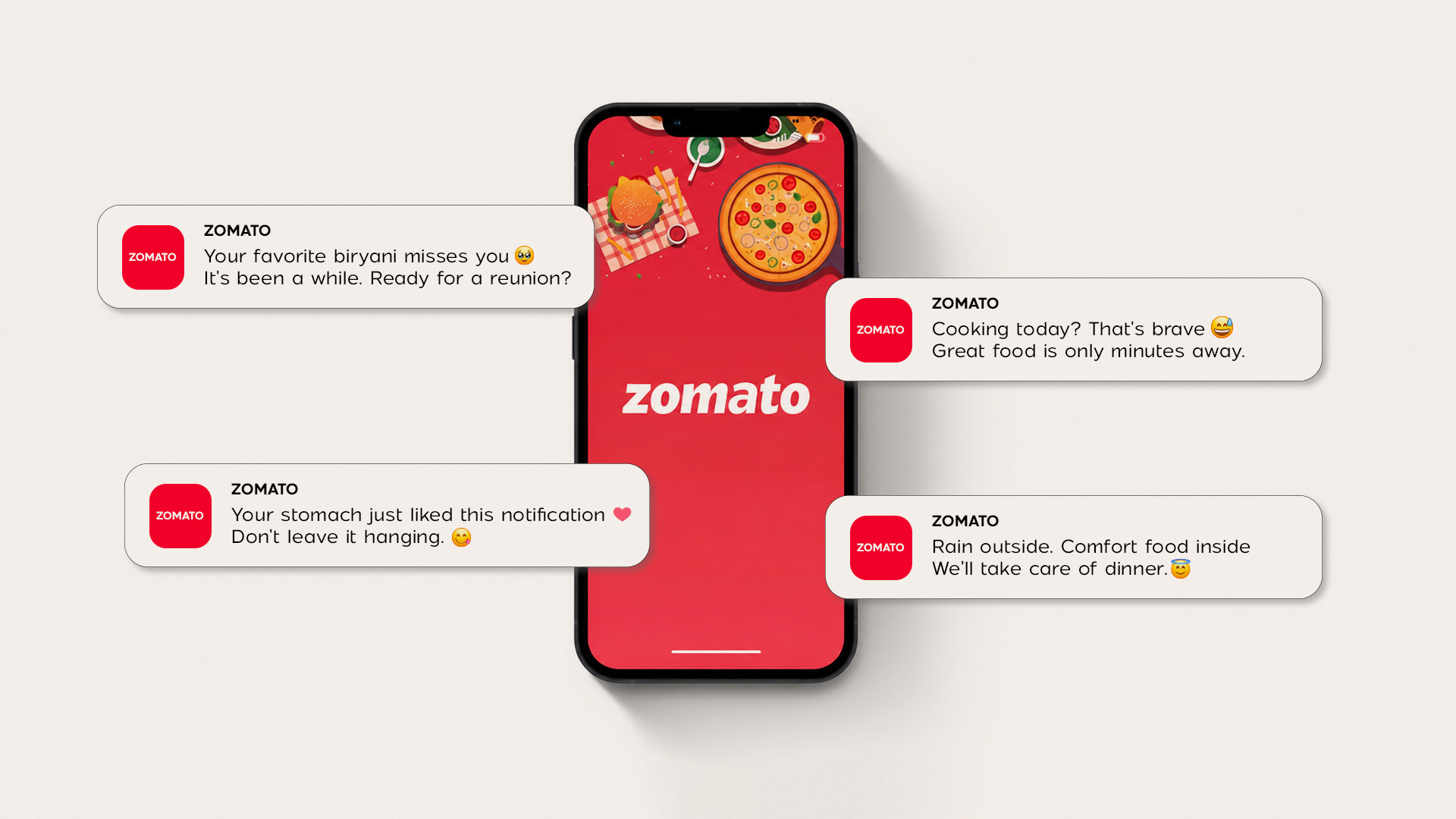
Your next customer is already online. Will they remember your brand?
The Role of Data in Zomato's Marketing Success
Behind the humor lies a sophisticated data-driven marketing engine.
Zomato analyzes:
- Customer ordering habits.
- Favorite cuisines.
- Order frequency.
- Geographic preferences.
- User behavior patterns.
This information enables highly personalized experiences.
For example, A customer who frequently orders pizza may receive personalized recommendations, exclusive offers, or reminders based on previous behavior.
Personalization increases relevance, and relevance drives conversions.
What Brands Can Learn from Zomato's Branding Approach
The biggest takeaway from Zomato's success is simple: People don't engage with brands because they have products. People engage with brands because they create meaningful experiences.
Businesses that want to build stronger customer relationships should focus on:
- Storytelling
- Consistency
- Creativity
- Personalization
- Customer-centric communication
This is where a professional ad agency in Ahmedabad can help businesses transform ordinary marketing efforts into memorable brand experiences.
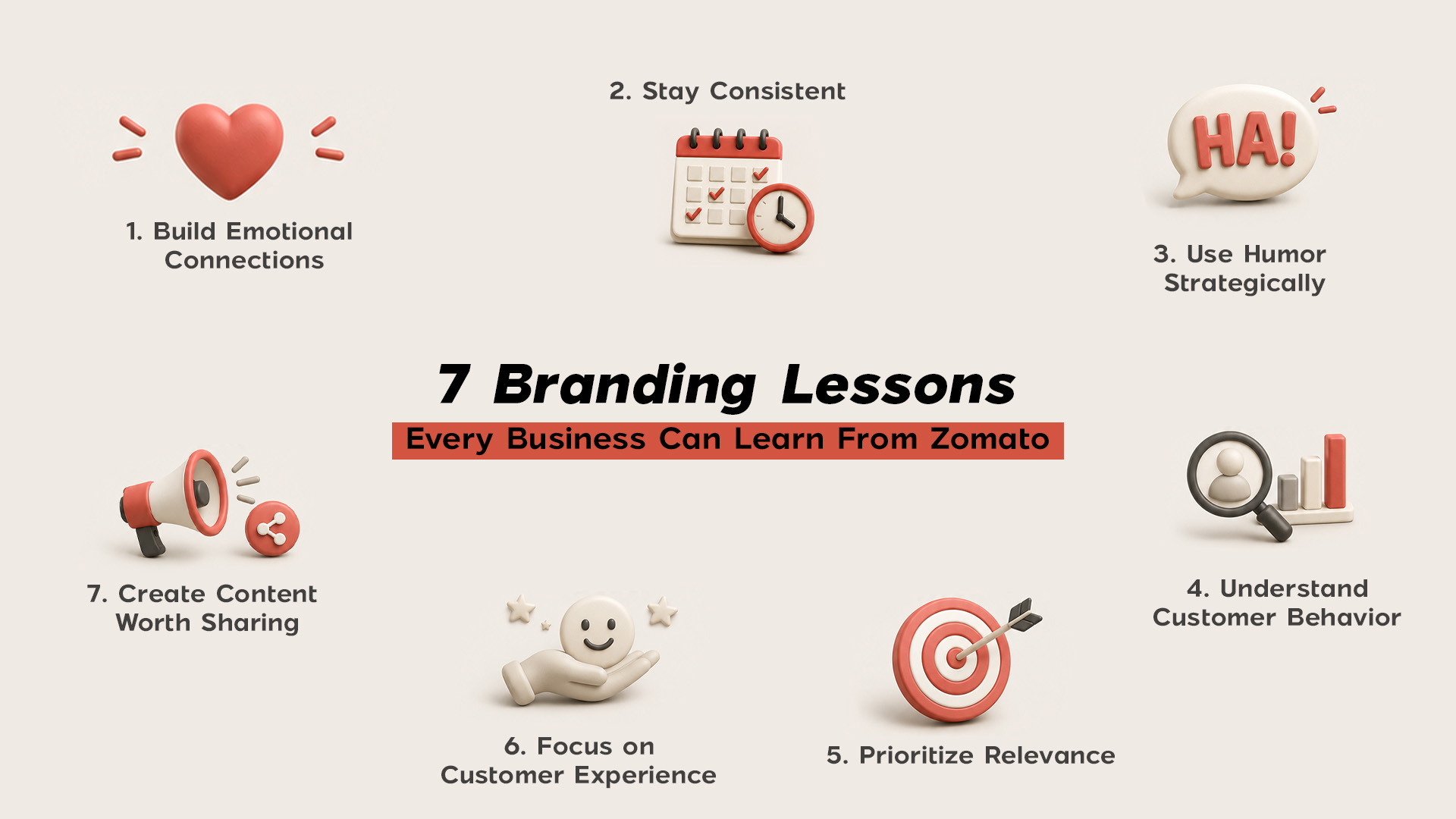
Why Businesses Need an Integrated Marketing Approach
Zomato's success isn't driven by a single campaign.
It's the result of multiple marketing elements working together:
- Branding
- Advertising
- Content marketing
- Social media
- Customer engagement
- Data analytics
- Performance marketing
A full-service advertising agency in Ahmedabad brings all these capabilities together, ensuring that every marketing activity contributes to a unified brand strategy and measurable business growth.
Great marketing turns curiosity into customers
Frequently Asked Questions
1. What is Zomato's marketing strategy?
Zomato's marketing strategy combines emotional branding, humor-driven content, personalized communication, data analytics, and customer engagement to increase brand recall and drive orders.
2. Why are Zomato's advertisements so effective?
Zomato's advertisements connect with customer emotions, use relatable humor, and appear at the right moments, making them highly engaging and memorable.
3. How does Zomato use social media marketing?
Zomato leverages trending topics, memes, user engagement, and real-time marketing to maintain a strong presence across social platforms.
4. What can businesses learn from Zomato's marketing strategy?
Businesses can learn the importance of storytelling, consistency, personalization, customer insights, and creating content that audiences genuinely enjoy.
5. How can a branding agency in Ahmedabad help businesses grow?
A branding agency can help businesses develop a strong brand identity, improve customer perception, create consistent messaging, and build long-term brand loyalty.
Wrapping Up
Zomato's marketing works even when you're not hungry because it understands something many brands overlook: Customers don't make decisions based purely on logic. They respond to emotions, experiences, convenience, and connection.
By combining creativity, data, humor, and customer-centric thinking, Zomato has built one of India's most recognizable and influential brands.
For businesses looking to achieve similar success, the lesson is clear: great marketing isn't about selling products, it's about creating experiences that customers remember long after the advertisement is over.
If your marketing isn't memorable, it's invisible

Zomato's Social Media Strategy
Zomato's social media success isn't accidental. The company understands that modern consumers prefer brands that feel authentic and relatable.
Its content strategy focuses on:
This approach transforms passive followers into active brand advocates.