
Brand Strategy vs Brand Identity vs Brand Marketing - A Complete Framework.
Table of Contents
Let’s be honest for a second.
If building a powerful brand were easy, everyone would be Nike. But that’s not the reality.
Instead, most brands are busy swapping logos like profile pictures, calling it “growth,” and hoping something sticks.
Spoiler alert: it doesn’t.
The real problem isn’t lack of effort or ambition. It's a misalignment. When branding strategy, brand identity, and brand marketing don’t speak the same language, even the best ideas fall flat. And that’s where brands start feeling confused, inconsistent, and forgettable.
So let’s cut through the noise.
It’s time to untangle the mess and understand how strategy, identity, and marketing are meant to work together, not separately, not randomly, but as one powerful system.
Your logo is not your growth plan.
The Secret Superpower of Brand Strategy
A brand strategy is not just a fancy slide deck. It’s the compass that stops your brand from wandering. According to the Harvard Business Review , brands with a clear strategy are 3x more likely to build loyal fans, not just customers.
So what’s the magic formula?
No magic. Just clarity.
It’s answering the questions most brands dodge:
- Why does your brand exist?
- Who are you for (and definitely NOT for)?
- What makes you different?
- Where are you heading?
For instance, Nike’s strategy isn’t to “sell shoes.” But to empower athletes. Everything else — logo, ads, campaigns — flows from that. Without a strategy, your brand identity and marketing are just decoration. Pretty decoration, yes, but still meaningless.
Key Elements of Brand Strategy
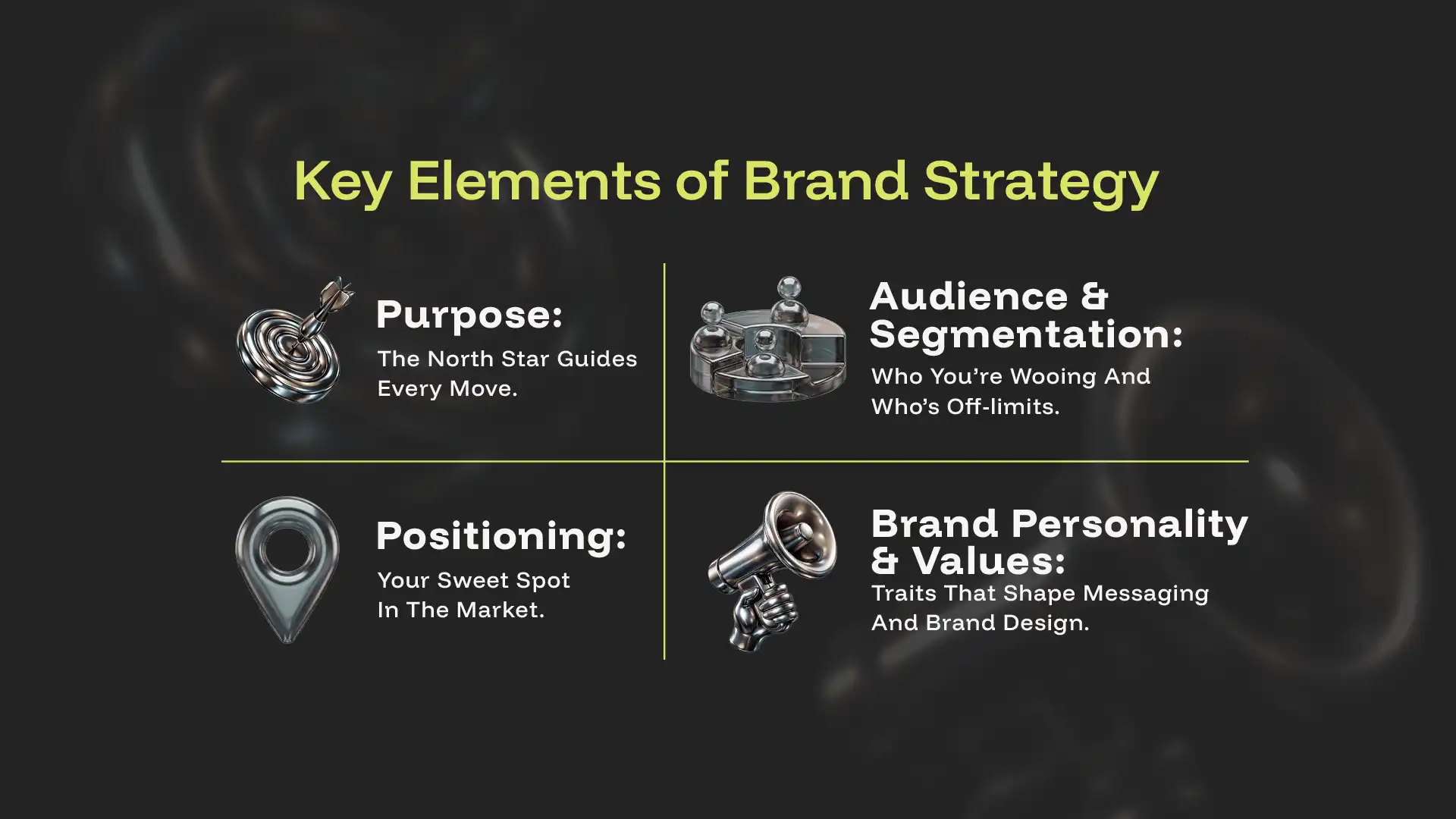
Pro Tip: Don’t skip this step. A strong strategy is the foundation for everything else.
How Your Brand Identity Steals the Spotlight
If strategy is the brain, brand identity is the look. The vibe. The outfit that says “I’ve got it together” before you open your mouth.
Components of a Killer Brand Identity
| Component | Focus | Example |
|---|---|---|
| Visuals | Logo, colors, typography | Apple’s sleek, minimalist logo |
| Voice | Tone, messaging, personality | Wendy’s sassy social media posts |
| Experience | Website, packaging, touchpoints | Starbucks’ consistent store vibe |
This is where brand identity brings personality to life. Good design and branding together turn recognition into trust.
Pro Tip: Skip identity, and you end up with a pretty logo nobody remembers.
How Brand Marketing Becomes Your Brand’s Hype Squad
If strategy decides what to say, and identity decides how it looks, marketing decides how often people think of you.
Brand marketing is how your brand shows up consistently, everywhere, without feeling desperate. It takes 5–7 impressions for people to remember a brand (Forbes).
Brand marketing includes:
- Social media content
- Ads and campaigns
- Content & Storytelling
- PR and outreach
For instance, Zomato’s witty push notifications aren’t random. They reflect a smart branding strategy, consistent brand identity, and careful brand management.
Consistency > Random creativity. Always.
Marketing without strategy is just noise.
The Typical Brand Journey vs The Correct Order
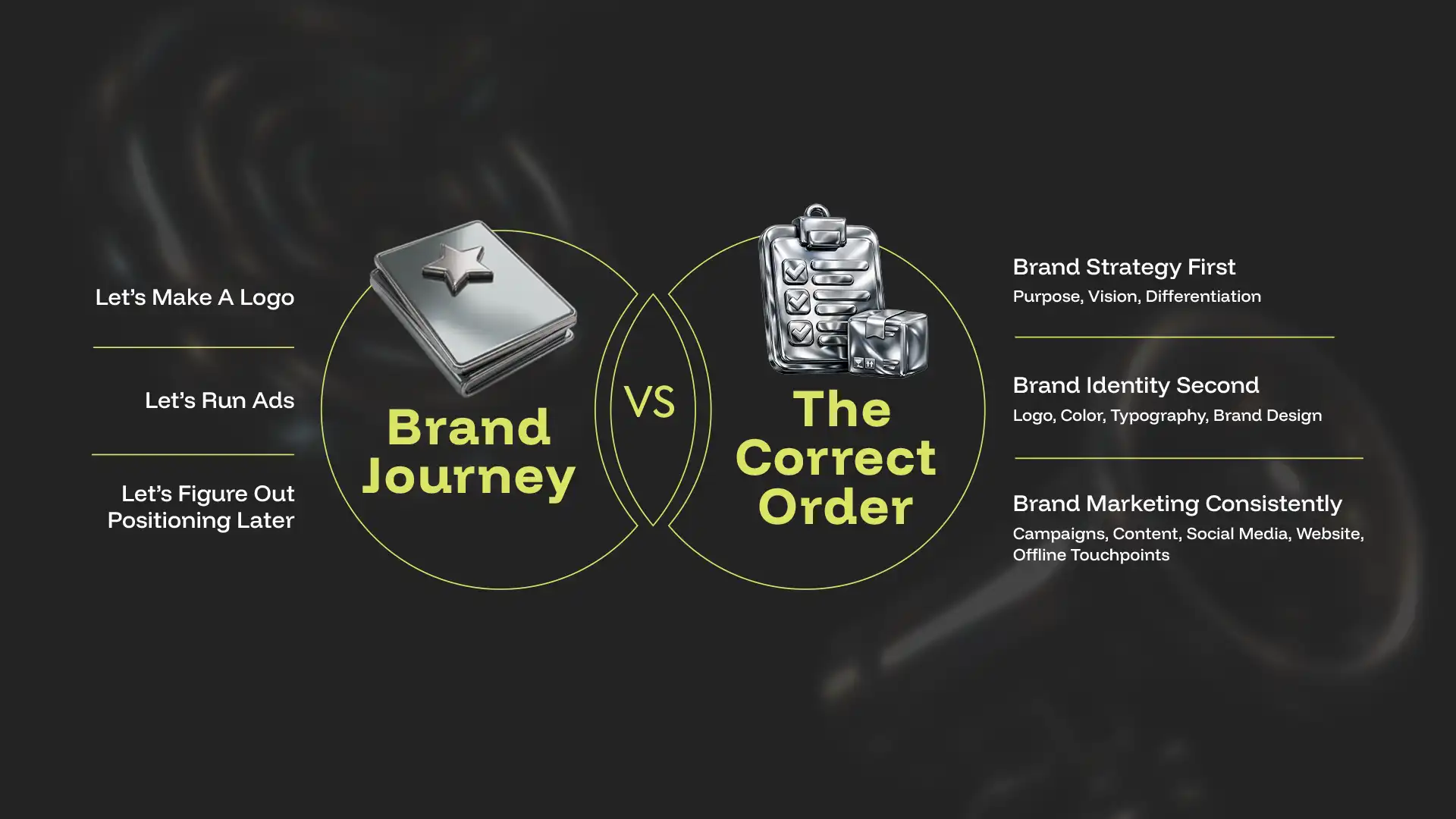
Brand Strategy vs Brand Identity vs Brand Marketing
Here’s a quick cheat sheet to understand the differences:
| Feature | Brand Strategy | Brand Identity | Brand Marketing |
|---|---|---|---|
| Purpose | Defines why your brand exists | Expresses strategy visually & verbally | Communicates your brand to the world |
| Focus | Big-picture direction & positioning | Look, feel, and personality | Awareness, engagement, conversions |
| Key Elements | Audience, positioning, differentiation, values | Logo, colors, typography, voice, brand design & branding | Campaigns, social media, ads, engagement |
| Outcome | Clear roadmap, loyal customers | Recognition, memorability | Reach, influence, and sales |
Common Branding Mistakes to Avoid
Have a sneak peek at the mistakes your brand should avoid:
- Logo ≠ Branding: A logo without strategy and identity is just a sticker on a confused product.
- Marketing Without Strategy: Ads without a clear purpose are like shouting random poetry in a crowded street.
- Copying Competitors: Following trends without a strategy makes your brand forgettable. Audiences sniff out inauthenticity fast.
- Inconsistent Identity: Different colors, tone, or messaging across platforms = confused audience = lost customers.
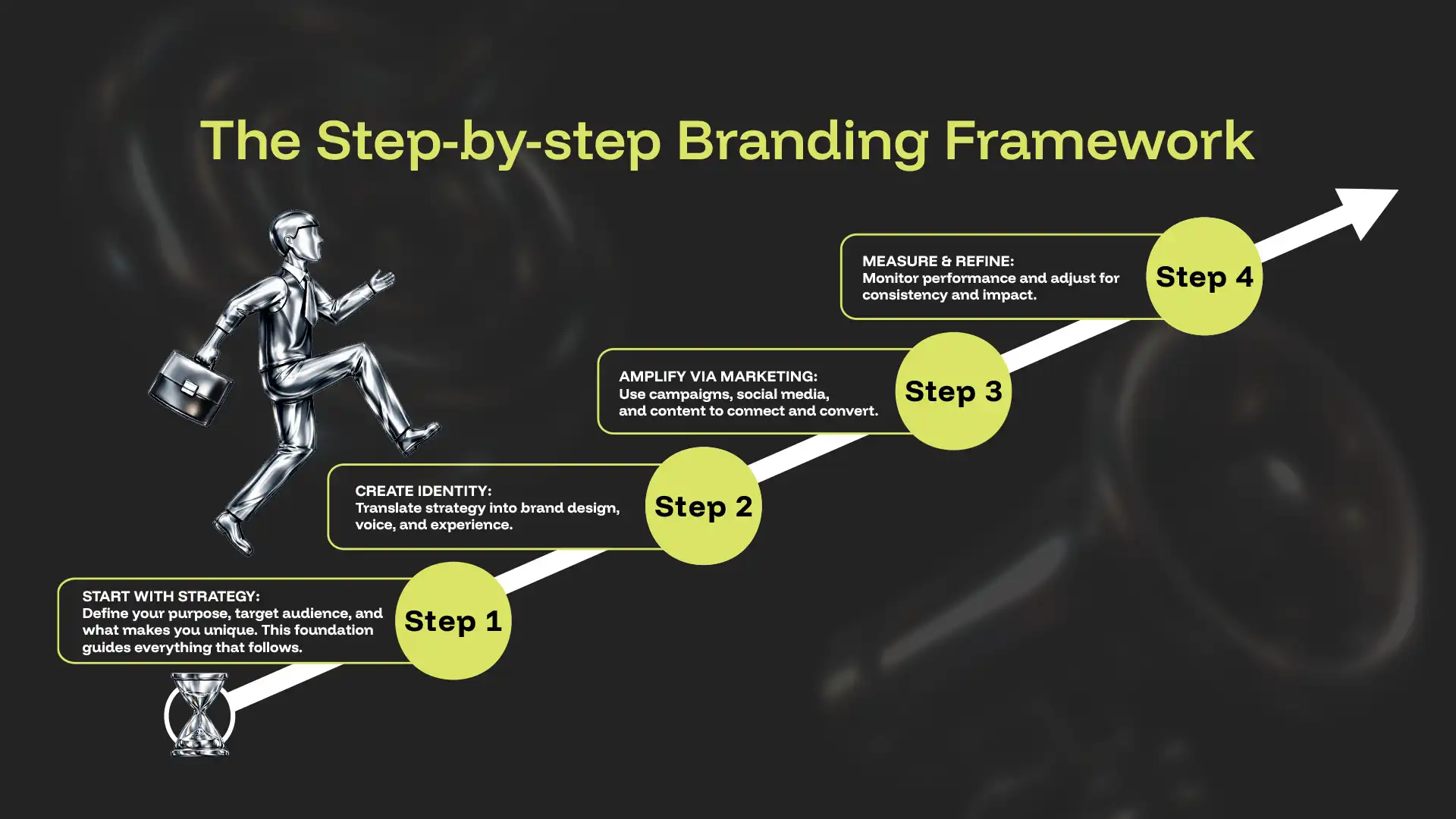
The Step-by-Step Branding Framework
Remember: Skipping any step = chaos. Your brand might be seen, but it won’t be remembered.
Wrap Up
Most brands fail not because they lack creativity, but because they treat branding like a to-do list. But real branding is a decision-making system. It shapes how you show up, what you say no to, and why customers choose you when options look identical. When strategy sets the rules, identity brings coherence, and marketing reinforces it daily, your brand stops reacting to the market and starts shaping it.
That’s the difference between being visible and being valuable.
If your brand still feels “off,” this is your sign.